
Speakers
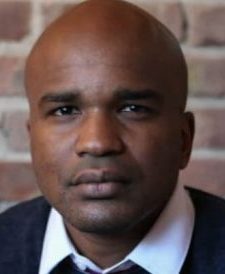
Bocar Ba
Assistant Professor | Department of Economics | Duke University
Dr. Ba is an applied microeconomist studying inequality, crime, and law enforcement through the lens of labor economics and political economy. He analyzes police use of force, misconduct, spending, and alternatives to traditional policing. He co-developed the Civic Police Data Project (CPDP.co), which tracks Chicago police officers and collaborates with national platforms, including mappingpoliceviolence.org, policescorecards.org, and policedata.org, to promote data-driven approaches to alternative policing in the United States and Canada.
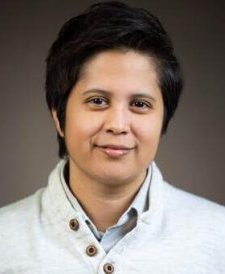
Rima Basu
Associate Professor | Department of Philosophy | Claremont McKenna College
Dr. Basu explores questions at the intersection of ethics, epistemology, and the philosophy of race. She argues that beliefs themselves can be wrong (doxastic wronging) and that moral considerations influence judgments about when evidence is sufficient to justify a belief (moral encroachment). Her recent publications have focused on the ethics of expectations, the ethics of belief, and the pressures and incentives that structure academic research publishing.
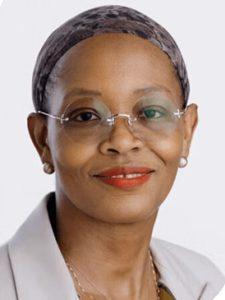
Audrey Bennett
Professor | Stamps School of Art & Design | University of Michigan
University Diversity and Social Transformation Professor | University of Michigan
Founding Director | Design for Social Innovation and Sustainability Lab | University of Michigan
Dr. Bennett is a cross-cultural, transdisciplinary scholar of graphic design and Professor at the Stamps School of Art & Design at the University of Michigan. She uses interactive aesthetics to democratize control of images and explore how visual culture shapes global thought and behavior. Bennett currently conducts fieldwork in Kenya and Ghana, investigating how interactive aesthetics can help prevent new HIV infections. Her publications include Interactive Aesthetics (2002), Towards an Autochthonic Black Aesthetic in Graphic Design Pedagogy (2003), Global Interaction in Design (2010), and Good Design is Good Social Change (2012).
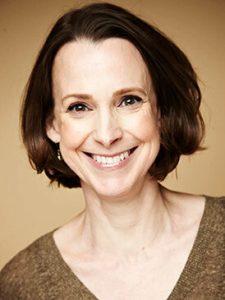
Kathleen Cagney
Director | Institute for Social Research | University of Michigan
Professor | Department of Sociology | University of Michigan
Research Professor | Survey Research Center | Institute for Social Research | University of Michigan
Research Professor | Population Studies Center | Institute for Social Research | University of Michigan
Dr. Cagney investigates how health intersects with social inequality, focusing on neighborhood environments, race, aging, and the life course. Using survey-based assessments, Professor Cagney examines how structural and social processes shape neighborhood contexts, including links between social capital, self-rated health, asthma prevalence, and other health indicators during the 1995 Chicago heatwave. She currently serves as co-investigator on the National Social Life, Health, and Aging Project, studying how historical events influence well-being, and as a collaborator on the Great Smoky Mountains Study of Rural Aging, exploring early determinants of aging in rural communities.
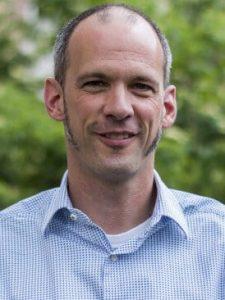
David Cunningham
Professor | Department of Sociology | Washington University in St. Louis
Dr. Cunningham investigates the causes and consequences of racial contention, focusing on the scope and legacy of organized white supremacist groups. Cunningham’s research examines FBI repression of social movements and the enduring effects of historical violence, including racial lynchings and enslavement, on modern inequalities. He has been featured in The New York Times, NPR, CBS News, and The Washington Post, and has served as a consulting expert for the American Civil Liberties Union, WGBH Educational Foundation, and Facing History and Ourselves. His book Klansville, U.S.A.: The Rise and Fall of the Civil Rights-Era Ku Klux Klan (2013) inspired the 2015 PBS American Experience documentary, Klansville, USA.
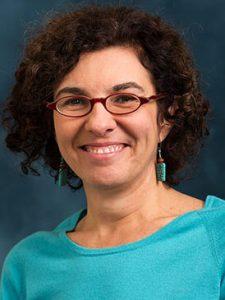
Ana Diez Roux
Distinguished University Professor | Department of Epidemiology | Dornsife School of Public Health | Drexel University
Director | Drexel Urban Health Collaborative | Drexel University
Dean Emerita | Dornsife School of Public | Drexel University
Dr. Diez Roux studies neighborhood health effects, including topics such as urban health, cardiovascular disease epidemiology, and social environment–gene interactions. She served as Principal Investigator of the SALURBAL (Salud Urbana en América Latina) Study, and currently serves as Multiple Principal Investigator for the SALURBAL Climate Project and the NIH-funded Drexel FIRST initiative, which focuses on early career development. She has contributed her expertise to several boards and panels, including the Environmental Protection Agency’s Clean Air Scientific Advisory Committee and the Board of Scientific Counselors of the National Center for Health Statistics. She currently co-chairs the Roundtable on Population Health Improvement of the National Academies of Sciences, Engineering, and Medicine.
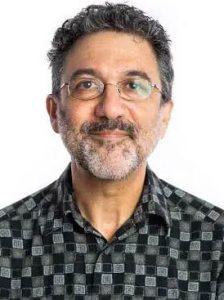
Ron Eglash
Director | The Center for Generative Justice
Dr. Eglash studies fractal patterns in African architecture, art, and religions, and explores the connections between indigenous cultures and modern technology. An ethnomathematician, he investigates topics such as transformational geometry in cornrow braiding, spiral arcs in graffiti, and analytic geometry in Native American beadwork. Until this fall, he was a professor at the University of Michigan School of Information and now leads the Center for Generative Justice, developing projects that emphasize collaboration, relational approaches, and unalienated circulation of ecological, labor, and social value.
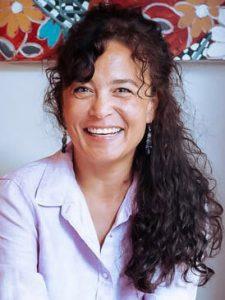
Margaret Hicken
Research Associate Professor | Institute for Social Research | University of Michigan
Research Associate Professor | Department of Internal Medicine | University of Michigan
Research Associate Professor | Department of Epidemiology | University of Michigan
Dr. Hicken investigates the link among socioenvironmental structure, biological mechanisms, and health inequalities. She integrates scholarship from the arts and humanities as well as multiple social sciences to develop a framework linking the logic and structure of racism to study population health patterns. An interdisciplinary scholar, she has published in journals such as Annual Review of Public Health, Annals of the American Academy of Political and Social Science, American Journal of Bioethics, and Souls: A Critical Journal of Black Politics, Culture, and Society.
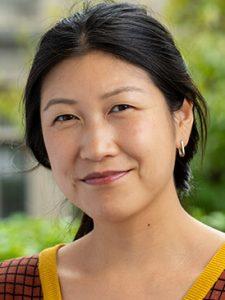
Lily Hu
Assistant Professor | Department of Philosophy | Yale University
Dr. Hu studies causal inference methodologies, focusing on how statistical frameworks define and measure the “causal effect” of social categories such as race and how these methods inform normative claims about racial discrimination and inequality. Her recent publications include “What is ‘Race’ in Algorithmic Discrimination on the Basis of Race?” (Journal of Moral Philosophy, 2024), “Sex Discrimination, Normativity, and Begging the Causal Question” (Political Philosophy, 2025), and “Does Calibration Mean What They Say It Means; Or, The Reference Class Problem Rises Again” (Philosophical Studies, 2025).
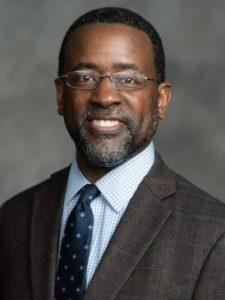
Vincent Hutchings
Diversity and Social Transformation Professor | University of Michigan
Hanes Walton Jr. Collegiate Professor | Political Science and Afroamerican and African Studies | University of Michigan
Research Professor | Center for Political Studies | Institute for Social Research
Dr. Hutchings researches political opinion, elections, voting behavior, and African American politics. He studies how members of Congress represent the interests of their Black constituents, how citizens understand the racial wealth gap, and how race and attitudes about policing. He is collaborating on a project that examines how news frames influence tensions among White, Black, and Latino populations. Dr. Hutchings has received several grants from the National Science Foundation for his research and has been elected a Fellow of the American Academy of Arts and Sciences (2012) and the National Academy of Sciences (2022). His work has been featured in leading journals, including the Annual Review of Political Science, Public Opinion Quarterly, American Political Science Review, and American Sociological Review.
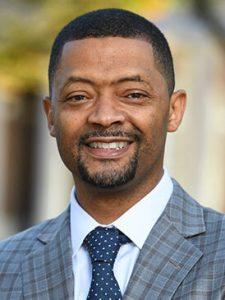
Odis Johnson, Jr.
Bloomberg Distinguished Professor | School of Education | Johns Hopkins University
Executive Director | Johns Hopkins Center for Safe and Healthy Schools | Johns Hopkins University
Director | Institute in Critical Quantitative, Computational, and Mixed Methodologies | Johns Hopkins University
Dr. Johnson directs both the Hopkins Center for Safe and Healthy Schools and the NSF-funded Institute in Critical Quantitative, Computational, and Mixed Methodologies. Johnson’s transdisciplinary research on neighborhoods, social policy, and race has received support from the NSF, NIH, William T. Grant Foundation, and the Spencer Foundation. His work spans 11 disciplines and has been featured in prominent outlets, including The New York Times, The Washington Post, CNN, The Associated Press, and NPR.
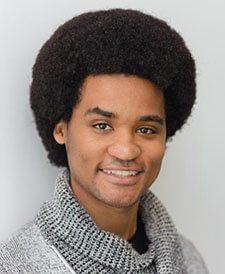
David McMillon
Assistant Professor | Economics | Emory University
Dr. McMillon uses systems thinking to understand systemic discrimination, but it is situated at the intersection of stratification economics (substantively) and applied theory (methodologically). His work explores how features of complex systems can be exploited to amplify or sustain the effects of racial equity-focused interventions, for the same reasons they amplify inequities in the status quo. This includes work on academic achievement, the school to prison pipeline, crime policy, reparations and wealth inequality, and formal models of systemic discrimination. David’s work has been funded by the Spencer Foundation, the American Educational Research Association, and the Washington Center for Equitable Growth.
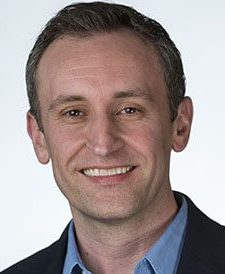
Colter Mitchell
Research Associate Professor | Survey Research Center | Institute for Social Research | University of Michigan
Research Associate Professor | Population Studies Center | Institute for Social Research | University of Michigan
Dr. Mitchell examines how social and family environments affect health and behavior throughout the life course. In his earlier research, he focused on the influence of social environments on the behavior of children and young adults. Recently, he has used longitudinal, population-based data to investigate how social conditions interact with genetic, epigenetic, and neurodevelopmental factors to predict health and well-being over the lifespan, including later stages of life.
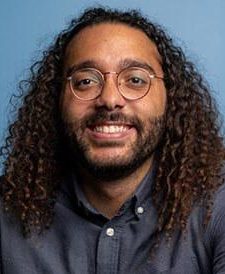
Davon Norris
Assistant Professor | Department of Organizational Studies | University of Michigan
Dr. Norris is an economic sociologist and examines how tools for determining value reproduce inequality, with a specific focus on scores and ratings, such as government and consumer credit scores. Dr. Norris’s research appears in Social Problems, Sociological Forum, and Social Forces, and has been supported by the American Sociological Association.
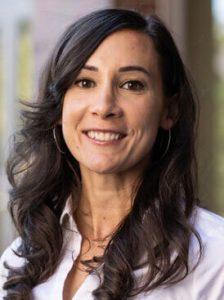
Mara Ostfeld
Research Director | Center for Racial Justice | Ford School of Public Policy | University of Michigan
Research Associate Professor | Ford School of Public Policy | University of Michigan
Research Associate Professor | Center for Political Studies | Institute for Social Research | University of Michigan
Dr. Ostfeld leads the Detroit Metro Area Communities Study and co-leads the Puerto Rico Public Opinion Lab, the first large-scale, representative study of political attitudes across Puerto Rico. An expert in survey research and political psychology, her work has appeared in prominent journals, including Political Behavior and Political Communication, and received support from the NSF and the Russell Sage Foundation. During national elections, she also serves as a political analyst for NBC and Telemundo.
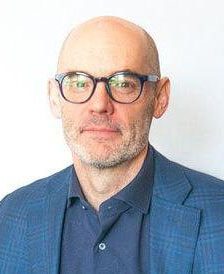
Scott Page
John Seely Brown Distinguished University Professor ofComplexity, Social Science and Management | Department of Complex Systems | University of Michigan
Williamson Family Professor of Business Administration | Stephen M. Ross School of Business | University of Michigan
Professor | Department of Political Science | University of Michigan
Professor | Department of Economics | University of Michigan
Dr. Page studies diversity, complexity, and collective intelligence. A fellow of the American Academy of Arts and Sciences and the National Academy of Sciences, he has authored over 100 research papers across disciplines and five influential books, including The Model Thinker and The Diversity Bonus. Page edits the Journal of Collective Intelligence and has delivered talks for organizations such as NASA, Google, and the World Economic Forum. His online course Model Thinking has reached over a million participants worldwide.
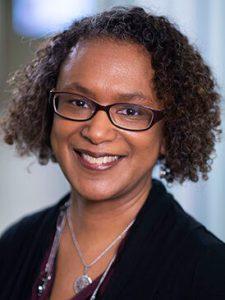
Devon Payne-Sturges
Professor | Department of Environmental Health Sciences | School of Public Health | University of Michigan
Dr. Devon Payne-Sturges is a Professor of Environmental Health Sciences at the University of Michigan School of Public Health. She investigates racial and economic disparities in exposure to environmental contaminants and develops systems science approaches to understand cumulative environmental health risks. Dr. Payne-Sturges leads the NIEHS-funded RESPIRAR Project, which examines how structural racism affects the health of migrant and seasonal farmworkers, and co-leads the Urban Equity Collaborative to address issues related to housing, immigrant rights, and small business displacement. Her career includes leadership roles at the Baltimore City Health Department and the U.S. EPA, where she advanced policy on children’s and minority environmental health.
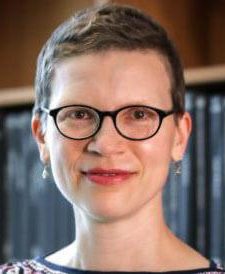
Elizabeth Popp Berman
Richard H. Price Professor | Department of Organizational Studies | University of Michigan
Director | Department of Organizational Studies | University of Michigan
Dr. Berman is the author of Thinking Like an Economist: How Efficiency Replaced Equality in U.S. Public Policy (2022), which traces how economic reasoning came to dominate Washington and has been featured in outlets such as Boston Review, New York Times, and The New Yorker. Her first book, Creating the Market University: How Academic Science Became an Economic Engine (2015), won multiple awards from the American Sociological Association and the Social Science History Association. Berman has also served on the editorial boards of the American Journal of Sociology and the American Sociological Review, and has written for broader audiences in outlets such as The Washington Post.
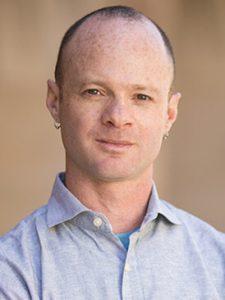
Victor Ray
F. Wendell Miller Associate Professor | Department of Sociology and Criminology | University of Iowa
F. Wendell Miller Associate Professor | Department of African American Studies | University of Iowa
Dr. Ray applies critical race theory to core sociological questions, with work published in American Sociological Review, Sociological Theory, and the Annals of the American Academy of Political and Social Science. His scholarship has earned multiple awards, including the ASA Section on Racial and Ethnic Minorities’ Early Career Award and the Southern Sociological Society’s Junior Scholar Award. Ray also writes for public audiences in outlets such as The New York Times, The Washington Post, and Harvard Business Review, and his first book, On Critical Race Theory: Why It Matters & Why You Should Care (2022), was featured in Publishers Weekly, Chicago Tribune, and Contexts: Sociology for the Public.
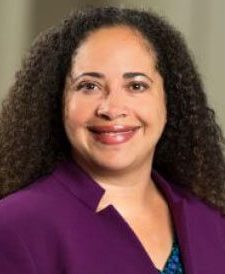
Isis Settles
LSA Associate Dean for Diversity, Equity, and Inclusion | College of Literature, Sciences, and the Arts | University of Michigan
University Diversity and Social Transformation Professor | University of Michigan
Professor | Department of Psychology | University of Michigan
Professor | Department of Afroamerican and African Studies | University of Michigan
Professor | Department of Women’s and Gender Studies | University of Michigan
Dr. Settles investigates how unfair treatment shapes the lives of devalued social groups, particularly Black people and women. She examines both the consequences of mistreatment and the protective factors and coping strategies these groups use to resist it. Dr. Settles’s current projects explore the experiences of faculty of color in academia and the role of diversity in interdisciplinary team dynamics. Her research has been published in leading journals, including the Psychology of Women Quarterly, Sex Roles, and Cultural Diversity and Ethnic Minority Psychology.
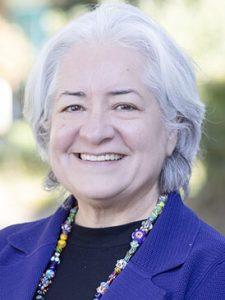
Leticia Saucedo
Martin Luther King Jr. Professor of Law | University of California, Davis
Professor Saucedo teaches courses in immigration, employment, labor law, and torts. She studies how employment and labor laws shape conditions in low-wage workplaces and how immigrant workers respond to these conditions. Saucedo has served as a visiting professor at Duke Law School and as a research scholar with the University of California, Berkeley’s Chief Justice Warren Institute on Race, Ethnicity, and Diversity. Her work appears in influential law reviews, including Washington University Law Review, Notre Dame Law Review, and University of Michigan Journal of Law Reform.
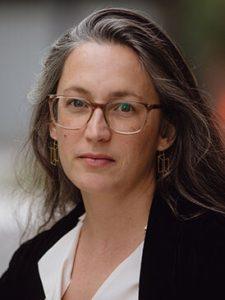
Louise Seamster
Associate Professor | Department of Sociology and Criminology | University of Iowa
Dr. Seamster studies contemporary mechanisms that reproduce racial and economic inequality, including urban development, emergency financial management, and debt. Her forthcoming book, The Flint Water Coup: Debt at the End of Democracy (under contract with Columbia University Press), examines the financial and political causes of the Flint Water Crisis. Dr. Seamster’s research on student debt and “predatory inclusion” has informed policy, including Senator Elizabeth Warren’s debt forgiveness plan. She has also appeared in national media outlets, including The New York Times’ Ezra Klein Show, Bloomberg News, and WNYC’s The Takeaway.
Ekeoma Uzogara
Associate Editor | Social and Behavioral Sciences | Science Magazine
Dr. Uzogara is the Associate Editor of Social and Behavioral Sciences at Science Magazine, where they bridge social science research with public understanding. She investigates a wide range of topics, including the evolution of sign language, vaccine hesitancy, and strategies to control cartel violence. Their past research examines perceived skin tone discrimination among African American women and men, complexion-based health disparities, and how skin tone biases shape segregation preferences. Uzogara’s research appears in journals such as Race and Social Problems, Psychology of Men & Masculinity, Ethnicity & Health, and Group Processes & Intergroup Relations.
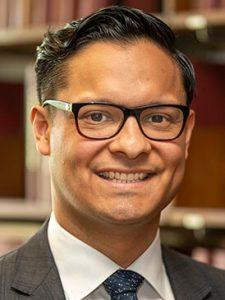
Robert Vargas
Director | UChicago Justice Project | University of Chicago
Professor | Department of Sociology | University of Chicago
Dr. Vargas is a social scientist who studies cities, law, and race, with a particular interest in how political and economic forces shape neighborhood conditions and city responses to social problems. His award-winning books, Wounded City: Violent Turf Wars in a Chicago Barrio and Uninsured in Chicago: How the Social Safety Net Leaves Latinos Behind, examine urban violence and healthcare inequality through longitudinal and intersectional ethnography. Dr. Vargas has published in journals such as Social Problems, Criminology, and Social Science & Medicine, and his research has appeared in NBC News, Telemundo, Univision, and The Chicago Tribune. He directs the UChicago Justice Project, which studies block-level homicide trajectories and the political economy of policing to inform institutional change in cities.
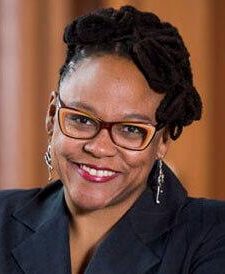
Rebecca Wanzo
Professor | Department of Women, Gender, and Sexuality Studies | Washington University in St. Louis
Dr. Wanzo studies African American literature and culture, critical race theory, feminist theory, and graphic storytelling. Dr. Wanzo is the author of The Suffering Will Not Be Televised: African American Women and Sentimental Political Storytelling (2009), which examines how African American Women’s suffering must be framed to be legible within U.S. institutions, and The Content of Our Caricature: African American Comic Art and Political Belonging (2020), which explores how Black cartoonists use racialized caricatures to critique ideals of citizenship. Her work has appeared in journals such as American Literature, Camera Obscura, and Signs, and she has written for media outlets including CNN, the LA Review of Books, and Huffington Post.
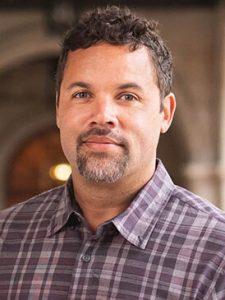
Geoff Ward
Director | WashU & Slavery Project | Washington University in St. Louis
Professor | African and African American Studies | Washington University in St. Louis
Dr. Ward researches the intersections of race, crime, and justice, with support from the National Science Foundation, the National Institute of Justice, the Ford Foundation, and the Mellon Foundation. Professor Ward is the author of the award-winning book, The Black Child-Savers: Racial Democracy and Juvenile Justice (2012), which examines the complex history and enduring legacies of juvenile justice during the Jim Crow era. His current research explores issues of racial violence, reparative justice, and anti-racist memory work within transitional justice processes.
Discussants
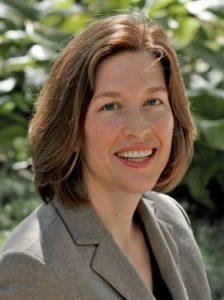
Sarah Burgard
Director | Population Studies Center | Institute for Social Research | University of Michigan
Research Professor | Population Studies Center | Institute for Social Research | University of Michigan
Professor | Department of Sociology | University of Michigan
Dr. Burgard studies the social stratification of aging and health using population-based survey data, focusing on health disparities across socioeconomic status, gender, and race/ethnicity throughout the life course. Her recent work explores how economic recessions shape the health trajectories of adults. Dr. Burgard currently directs wave 5 of the Americans’ Changing Lives Study and serves as Principal Investigator of the Michigan Recession and Recovery Study.
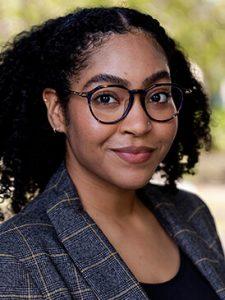
Lindsey Burnside
Postdoctoral Fellow | Institute for Social Research | University of Michigan
Dr. Burnside is a social psychologist by training and examines how people cope with social stratification, including racism-related stress, using micro-level approaches. As Study Coordinator for the Landscapes Lab, she investigates how social and environmental indicators of cognitive aging and work-related stress contribute to sleep deficiencies and poor health. Her past research explores in-group expectations of social affirmation and the links between racial residential segregation and health disparities through epigenomic mechanisms.

Reed DeAngelis
Assistant Research Scientist | Institute for Social Research | University of Michigan
Dr. DeAngelis researches the interplay between human societies, health, and aging. Most of his work focuses specifically on explaining why certain groups of people live shorter and sicker lives than others. He also investigates how people cope with chronic stress using religion and other social support mechanisms.
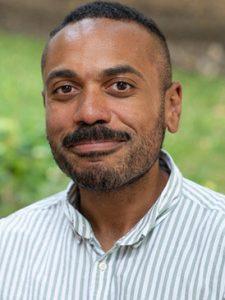
Michael Esposito
Associate Professor | Department of Sociology | University of Minnesota
Dr. Esposito investigates the structural mechanisms driving racial and class-based health inequalities in the United States. He examines how Black and working-class Americans experience higher rates of illness and premature death compared with their White and professional-class counterparts, showing that these disparities stem from racism and classism embedded in U.S. political, economic, and social systems. Dr. Esposito’s research appears in journals such as American Journal of Sociology, American Journal of Public Health, Journal of Aging and Health, and The Annals of the American Academy of Political and Social Sciences.
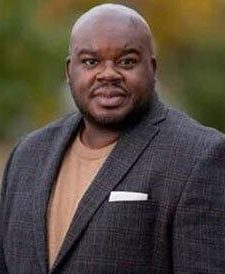
Darrell Hudson
James S. Jackson Collegiate Professor | Department of Health Behavior and Health Equity | University of Michigan
Chair | Department of Health Behavior and Health Equity | University of Michigan
Dr. Hudson investigates how social determinants of health, particularly racism, shape a range of health outcomes. Hudson’s research examines racial and ethnic differences in depression and the effects of upward social mobility on the health and well-being of Black Americans. His work has received support from the Ford Foundation, the Russell Sage Foundation, and the Robert Wood Johnson Foundation, and has appeared in journals such as Social Science & Medicine, American Journal of Epidemiology, and Journal of Black Psychology.
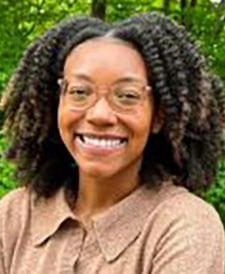
Nita Kanney
Doctoral Candidate | Department of Epidemiology | University of Michigan
Nita Kanney, MPH, is committed to advancing health equity by examining how gestational conditions impact the epigenome of mothers and their children, influencing long-term health outcomes. Her past research has explored STI/STD vaccine uptake among adolescents and investigated epigenetic age acceleration in mothers and children ages 4–10 following pregnancies complicated by gestational diabetes and obesity.
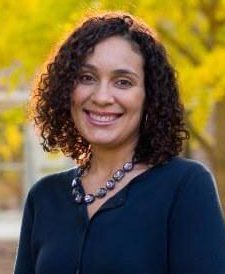
Hedwig (Hedy) Lee
James B. Duke Distinguished Professor | Department of Sociology | Duke University
Dr. Lee investigates how structural racism shapes racial and ethnic health disparities. Her research examines the health effects of familial incarceration, racialized chronic stress, and racial violence, revealing the social forces behind population health inequities. Lee’s work has received support from the Russell Sage Foundation, the Spencer Foundation, and the National Institutes of Health, and has appeared in top journals across disciplines, including the Annual Review of Public Health, the Annual Review of Criminology, and the American Journal of Sociology.
Mara Ostfeld
Research Director | Center for Racial Justice | Ford School of Public Policy | University of Michigan
Research Associate Professor | Ford School of Public Policy | University of Michigan
Research Associate Professor | Center for Political Studies | Institute for Social Research | University of Michigan
Dr. Ostfeld leads the Detroit Metro Area Communities Study and co-leads the Puerto Rico Public Opinion Lab, the first large-scale, representative study of political attitudes across Puerto Rico. An expert in survey research and political psychology, her work has appeared in prominent journals, including Political Behavior and Political Communication, and received support from the NSF and the Russell Sage Foundation. During national elections, she also serves as a political analyst for NBC and Telemundo.
Acknowledgements
Funding provided by:
- University of Michigan Institute for Social Research
- University of Michigan Survey Research Center