
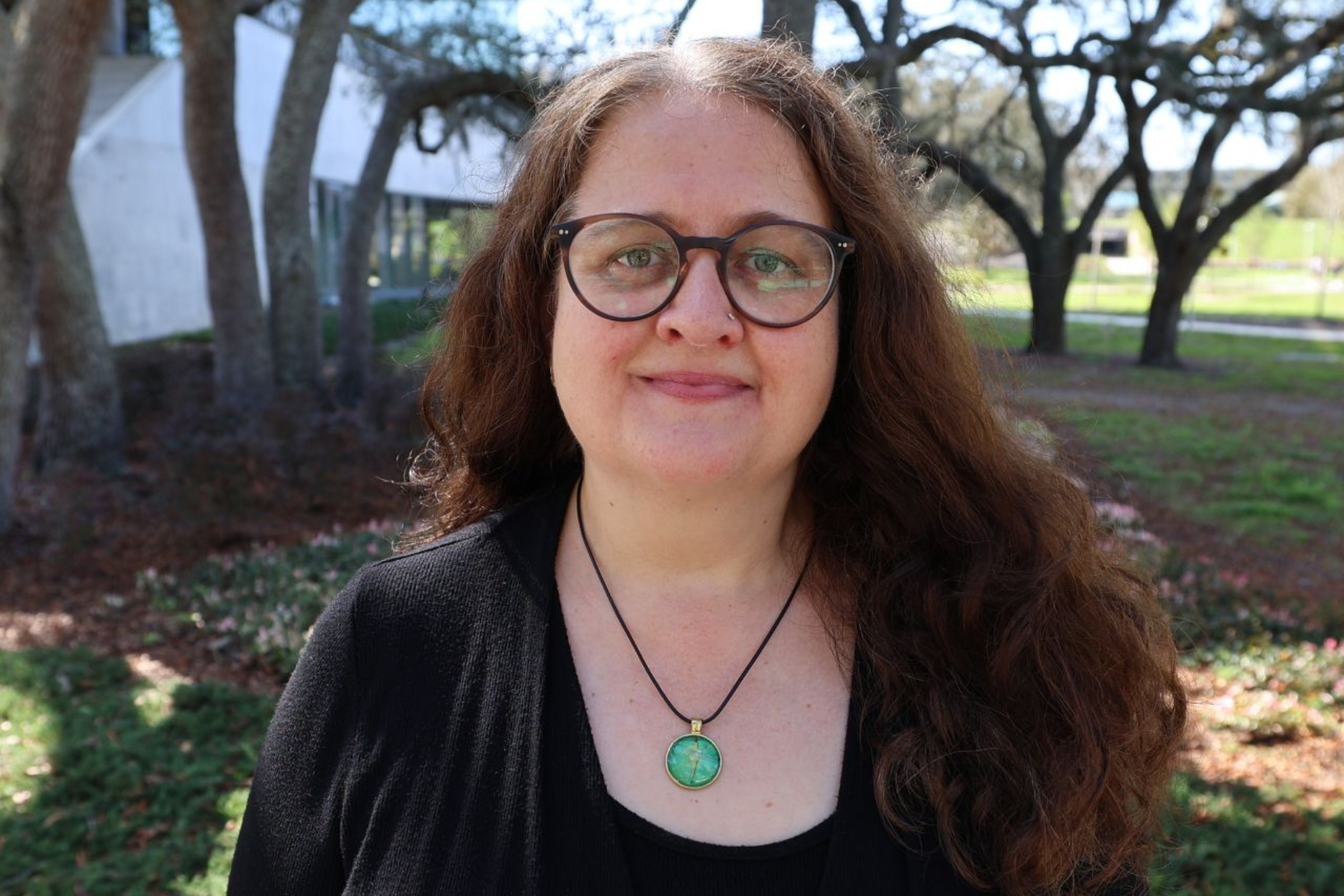
Next Generation Initiative funds helped Holly Donahue Singh build an interdisciplinary perspective
May 26, 2026
Next Generation Initiative funds helped Holly Donahue Singh build an interdisciplinary perspective
ANN ARBOR — Anthropology is similar to a lot of the work that happens at the Institute for Social Research — but not the same. That fact put Holly Donahue Singh, who mainly focuses her research on cultural and medical anthropology in rare company when she arrived at ISR for a postdoctoral position in the Population Studies Center (PSC) in 2014.
But she didn’t view it as an odd fit. It was exactly what she wanted.
“I was there for a training fellowship, and I kind of became a student again,” Singh said. “There weren’t a lot of anthropologists hanging out at ISR, but I was able to learn alongside sociologists, economists, political scientists, and attend seminars and audit courses that related to the work I was doing as an anthropologist.”
Her opportunity at ISR aligned well with the work she was doing on her dissertation, which would ultimately become a book. Exposure to the multi-disciplinary environment at ISR gave her a new perspective into her own research.
“I found as I was going along that demography was pretty important for my book manuscript work. It wasn’t something I was deeply familiar with prior to being at ISR, so it allowed me to bring a new dimension to my work and look at my own research in a new light.”
And while at ISR, Singh also received funding from the Next Generation Initiative (NGI), which also allowed to add to her work in new ways.
Singh’s book, titled “Infertility in a Crowded Country,” explored questions and topics related to infertility in India, the most populous nation on earth. The NGI funds enabled Singh to go on a second trip to India for field research, paving the way for her interactions with interview subjects by smoothing the logistics related to international travel while also assisting with other research hurdles like ethical oversight of the project.
“I spent time in infertility clinics talking with people who were being treated there, talking with the medical staff, the nurses and the doctors, and observing operations there,” she said. “I also spent time in the community, going to women’s group meetings to talk about their perspectives on things like the importance of having children in their social and cultural context, and what happens when that doesn’t go as people plan.”
The funds also helped with domestic travel. Singh attended research conferences such as the Population Association of America annual meeting in the United States that helped with her research in addition to building important career connections.
Her work on the manuscript laid the foundation for her post-ISR career. After her time at ISR came to an end, Singh spent a year at Bowdoin College in Maine before landing at the University of South Florida in 2017. There, she teaches pre-health majors in the honors college, working with students who will one day become public health workers, nurses, midwives, and more, drawing directly from her ISR experience as she designs courses intended to teach students to examine the whole patient, not just their symptoms.
It’s a profoundly interdisciplinary approach, one shaped by ISR and the NGI funds that helped Singh finish her research.
“My time at ISR was kind of unusual. There are not a lot of places that do the kind of work that ISR does that are interested in anthropologists,” Singh said. “I’m happy I was able to come to ISR and be a part of the community, and I hope I was able to bring a little bit to the ISR community, too.”