
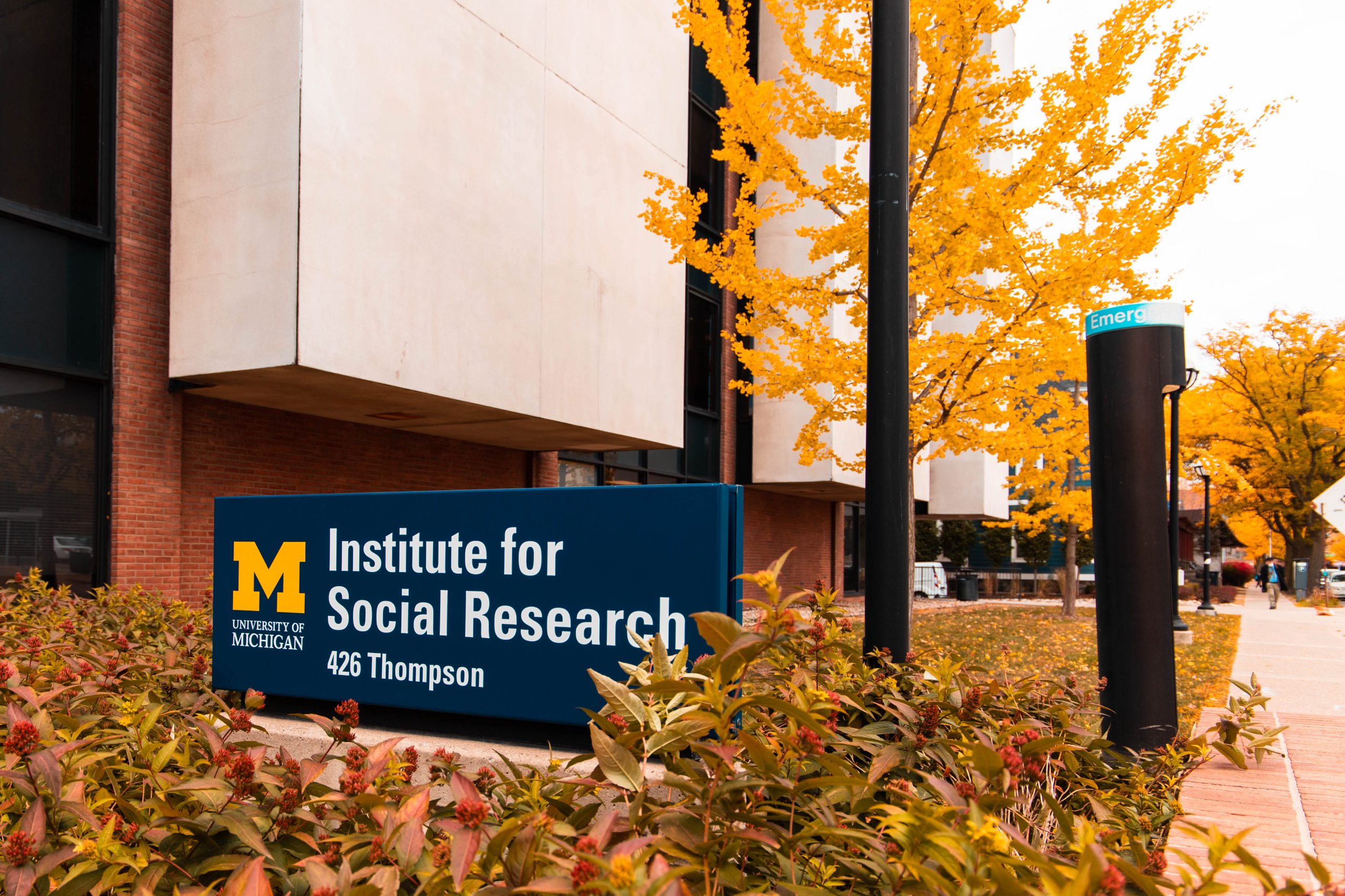
ISR’s d3c receives $13.5 million grant renewal
November 3, 2026
ANN ARBOR — The Institute for Social Research’s Data Science for Dynamic Intervention Decision Making Center (d3c) has had its P50 award renewed by the National Institutes of Health (NIH), extending its funding for the next five years.
The $13.5 million renewal will support d3c’s ongoing work to develop and share methodologies for adaptive and personalized health interventions. Adaptive interventions are services that use dynamic information, such as a person’s medication adherence, stress level, physical location, and ongoing progress with their treatment to determine when and how to deliver future treatment.
“The goal is to address the unique and changing needs people have as they evolve over time,” said d3c director Billie Nahum-Shani. “Many adaptive interventions use advances in mobile technologies and artificial intelligence to address the rapidly changing needs people have in daily life, such as helping them manage cravings by delivering support from a mobile device.”
At d3c, work centers on developing experimental designs, data analytic methods and artificial intelligence algorithms that investigators can use to optimize adaptive interventions. Coordinating research with New York University and Harvard University, d3c develops open-source resources that researchers can use on their own, and provides training and mentoring to researchers across health fields. The grant renewal will support continued work in those areas, engaging investigators across campus including the Department of Psychiatry, School of Information, the Department of Biostatistics and the Department of Statistics
In addition, the funding will allow d3c to pursue new initiatives focused on three main areas: developing interventions that address co-occurring health conditions (such as heavy cannabis use and depression), improving the integrations between human and digital healthcare, and advancing artificial intelligence-powered interventions.
“Instead of designing and training artificial intelligence algorithms to maximize profit for a few companies — sometimes at the expense of individuals’ mental health — we create algorithms that maximize positive health outcomes for more people. We make those algorithms accessible and reproducible so that patients, researchers, and providers can not only use them in practice, but also understand how they work and leverage them to advance behavioral and health sciences,” said Nahum-Shani.
The grant will also fund further development of d3c’s JustIn resource, an open-source platform intended to reduce the time, cost, and software-engineering burden of building mobile health studies.
Taken all together, the grant represents a significant vote of confidence in multidisciplinary, coordinated research to advance methodologies for adaptive and personalized interventions.
“P50 applications are evaluated not only on the strength of individual research projects, but also
on whether the proposed center creates scientific integration and public value that could not be
achieved through separate grants,” said Nahum-Shani. “This renewal brought together three major research projects, three supporting cores, extensive software and training infrastructure, and partnerships spanning academia, healthcare, industry, and advocacy.”
Contact: Jon Meerdink ([email protected])