
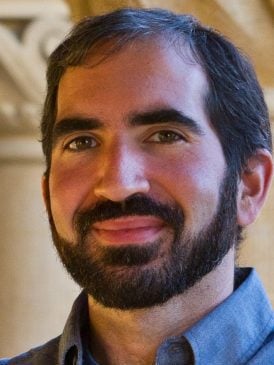
Insights talk investigates data gleaned from police body camera footage
September 28, 2026
ANN ARBOR — In the not-too-distant past, police use of body cameras was a rarity. Now, it’s practically ubiquitous; the technology has spread fast and far, giving police and those that monitor them an important tool for evaluating police conduct.
But more than providing evidence for or against police misconduct, body cameras have also become an important source of data for everyday interactions between law enforcement and the people they serve. In the latest edition of the Insights Speaker Series, Nick Camp, a faculty associate in the Institute for Social Research’s (ISR) Research Center for Group Dynamics (RCGD), explored some of the data from these body cameras and examined what it can tell us about the daily realities of police work.
According to Camp, a defining feature of police body cameras is their limitations.
“Thinking back to powerful body camera footage that we’ve seen, including the murder of George Floyd, this footage can be really powerful, critical evidence, but it’s also evidence that’s limited by both the video itself and the perspective of the camera, and also the presumptions of the people viewing it,” he said.
But recognizing those limitations opens the door to other interesting perspectives. Even if body cameras aren’t a cure all, they provide important context in three different ways.
First, Camp argues, they provide a real-life look at police interactions with the public that’s lost when just relying on police reports.
“When we use administrative data to understand policing, we get a really impoverished view of what actually happens in those contexts,” he said. “Two stops that look identical on paper can play out in very different ways.”
Second, body cameras can scale. In addition to high-profile incidents, officers record thousands and thousands of interactions every day, massively increasing the amount of usable data researchers can examine to study not just specific incidents, but larger patterns across departments.
Third, body camera footage can provide a unique interpretative window into police interactions.
“It gives us a way of exposing different people to the same interaction and seeing how they might see it similarly or differently,” Camp said.
Camp has spent more than a decade examining body camera footage through these three contextual lenses, capturing important insights from the overall body of data in the process. Those insights fell into three main categories: data that captures police/community conversations, measurements of interpersonal factors for how people think of law enforcement, and information that can affect and measure change in policing.
Camp explored all three of these categories through his talk, titled “Body Camera Footage as Data,” the full video of which is available below.
For more information about ISR’s Insights Speaker Series, including past and future speakers, click here.